Art is deeply integrated into society and shapes many parts of daily life. Having lived in different parts of the world, I have encountered art in many forms throughout my journey. In China, I became especially interested in traditional clothing as I traveled, observed daily life, and met people from different backgrounds. This article shares my personal observations of Hanfu (汉服) and explores how it reflects China’s rich cultural identity.
Hanfu Culture and Traditional Clothing
Hanfu refers to the historical clothing traditionally worn by the Han Chinese majority from ancient times until the end of the Ming dynasty in 1644. Known for cross-collars, right lapels, wrapped robes, and fluid lines, Hanfu reflects Chinese ideas of harmony, social propriety, and respect for nature. Core design forms include the yi and shang (衣裳), a two-piece system with an upper tunic and lower skirt, and the shenyi (深衣;), a one-piece robe in which the top and bottom are stitched together. These garments were often completed with wide fabric sashes, jade pendants, and distinctive hair crowns or pins.
Han Dynasty: Ritual, Status, and Dignity
The origins and early development of Hanfu are closely connected to the Han Dynasty (202 BC–220 AD), when clothing expressed ritual, social status, and full-body coverage. Common styles included the shenyi, a one-piece robe wrapped around the body, and the quju (曲裾), a curved-hem robe wrapped diagonally. Overall, the style was minimalist yet dignified, defined by sharp borders and wide, structured sleeves.
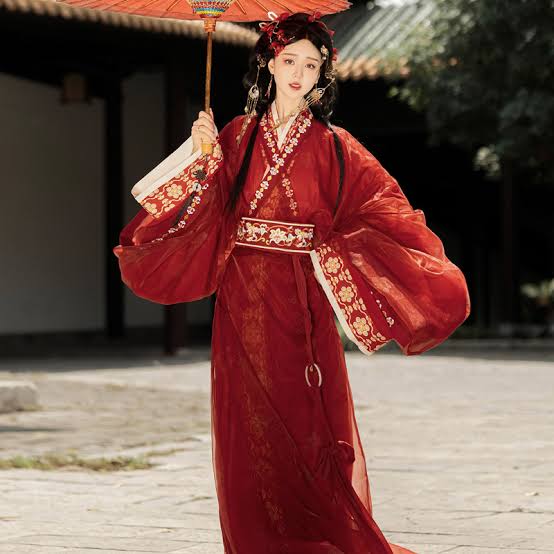

Tang Dynasty: Color, Movement, and Openness
During the Tang Dynasty (618–907 AD), Hanfu became more lavish, expressive, and fluid. As a golden age of wealth and international trade, the Tang period produced some of the most vibrant styles in Chinese fashion history. One signature form was the qixiong ruqun (齐胸襦裙), a skirt tied high above the chest and often paired with a sheer outer robe called the daxiushan (大袖衫). The aesthetic was colorful and confident, marked by low necklines, floral designs, phoenix embroidery, and generous movement.


Song Dynasty: Restraint, Elegance, and Daily Practicality
In the Song Dynasty (960–1279 AD), Hanfu became more restrained, elegant, and practical. Influenced by Neo-Confucian values, Song styles emphasized humility, intellectual simplicity, and refined layering. Popular garments included the beizi (褙子), a long, straight-cut front-opening coat with side slits, and the baizhequn (百褶裙), a pleated skirt. Compared with Tang fashion, the Song aesthetic was narrower, softer, and more suited to daily life, often featuring muted pastel colors.


Ming Dynasty: Structure, Formality, and Ornament
During the Ming Dynasty (1368–1644 AD), Hanfu became more structured, formal, and ornate. After Mongol rule, the Ming period revived traditional Han clothing styles with a renewed emphasis on symmetry, geometric structure, and richly layered fabrics. Signature garments included the ao, a lined or padded upper jacket, and the mamianqun (马面裙), or horse-face skirt, which features flat front and back panels with side pleats. The overall aesthetic was dignified and ceremonial, shaped by structured collars, brocade, satin, rank patches, and gold-woven details.


Hanfu in Contemporary China
Today in China, Hanfu has become both a mainstream subculture and a dynamic fashion trend, especially among younger generations with growing cultural confidence. It has moved beyond a niche hobby into everyday lifestyle wear, with some people incorporating Hanfu-inspired pieces into outfits for work, shopping, school, or social events. For those seeking a fuller historical experience, tourism businesses offer costume rentals, makeup, hairstyling, and professional photography in scenic or historic settings. Traditional festivals such as the Mid-Autumn Festival, Dragon Boat Festival, and Spring Festival also give families and visitors popular occasions to wear Hanfu in public celebrations.
Hanfu is more than clothing; it is a visual expression of history, artistry, and cultural memory. Its flowing sleeves, wrapped forms, and balanced silhouettes create movement and elegance while preserving design principles developed over centuries. These garments connect modern wearers and observers to older ideas of beauty, etiquette, and identity while remaining relevant in contemporary life.
For me, Hanfu is compelling because it brings the past into everyday spaces rather than leaving it only in museums or history books. Seeing these garments worn today shows how cultural traditions can adapt, renew themselves, and continue shaping personal and national identity.
Learning about Hanfu has helped me see traditional Chinese clothing not only as beautiful attire, but also as a living expression of history, values, and cultural identity. Each dynasty contributed its own meaning and style, creating a tradition that still inspires appreciation and curiosity. In contemporary China, Hanfu’s presence in fashion, festivals, and tourism shows how historical culture can remain visible, meaningful, and alive in modern life.